04 / 09
A bqc·point is not an acupuncture point
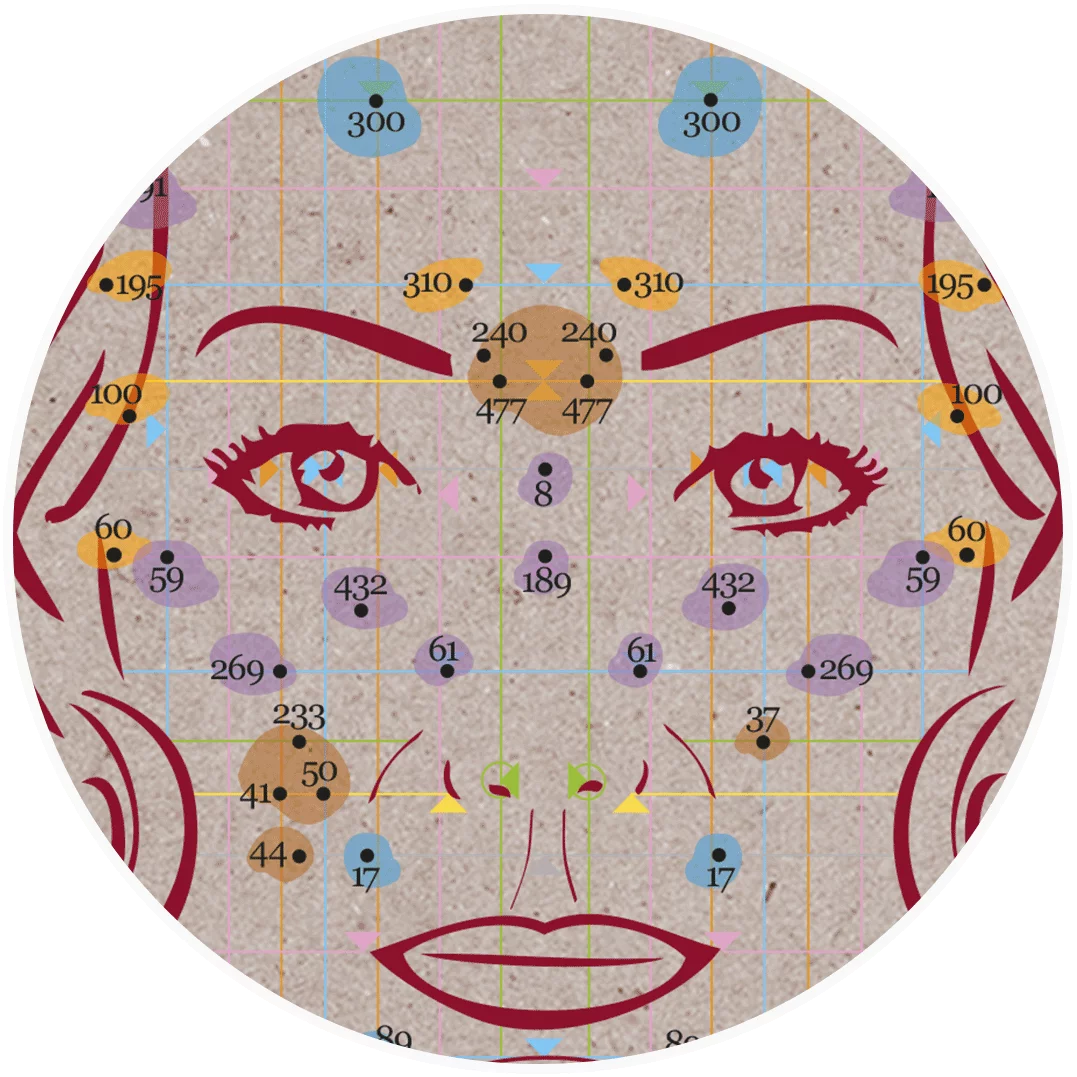
This is the most widespread confusion. bqc·points follow no meridian, are never needled and do not belong to the same reading of the body. They are stimulated on the surface, with multireflex tools.
Three differences that change everything
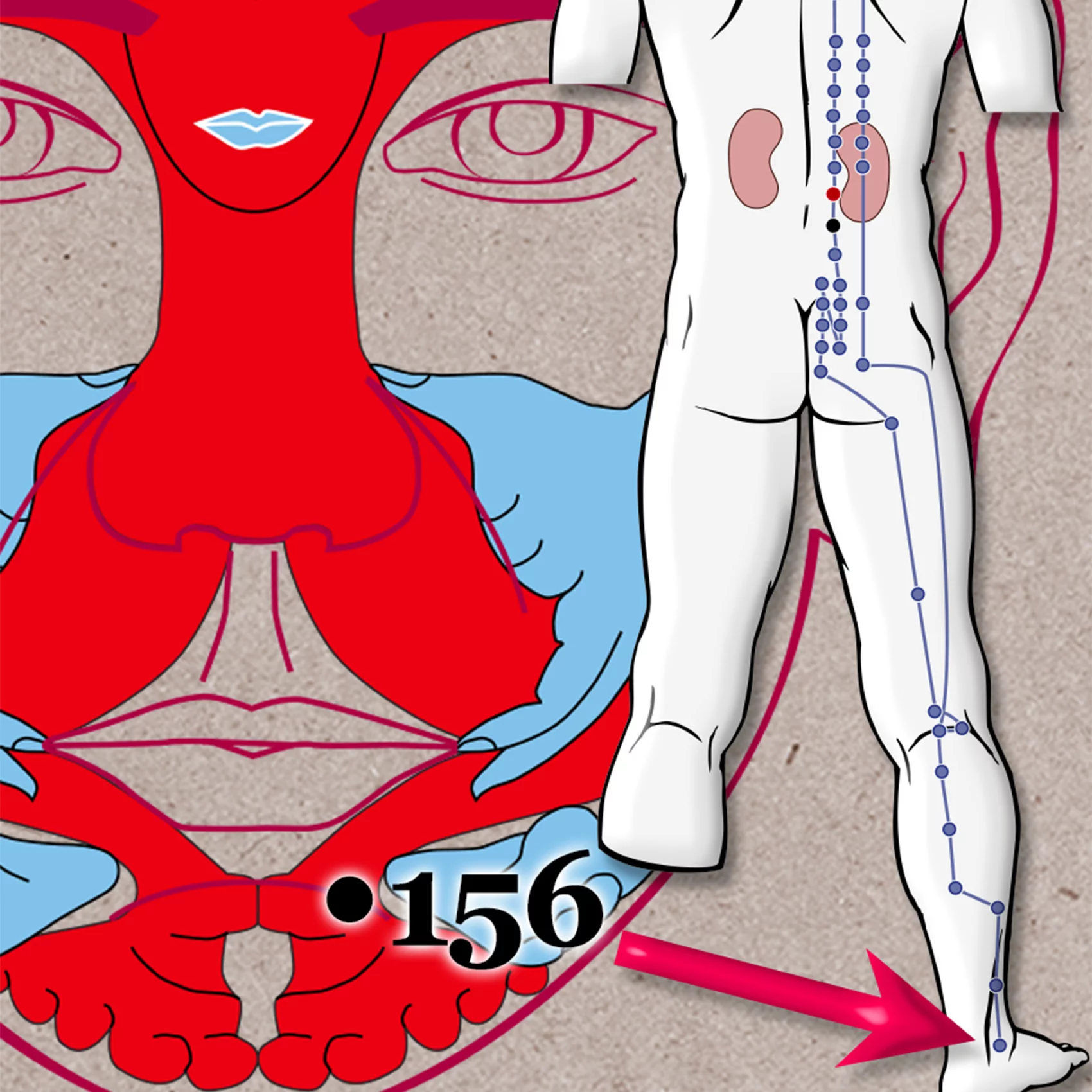
First, no needles: the skin is never altered. Everything is done gently and with multireflex tools.
Second, the map of bqc·points follows none of the meridians of traditional Chinese medicine.
Some points coincide, and that is all: the Dien Chan map was established through observation, not inherited from an existing system.
Finally, yin and yang do not remain abstract notions. Multireflex tools make them concrete: depending on the material, the shape and the gesture, the effect is toning or soothing. You choose, you feel, you adjust.
Learning to read the map before looking for the point
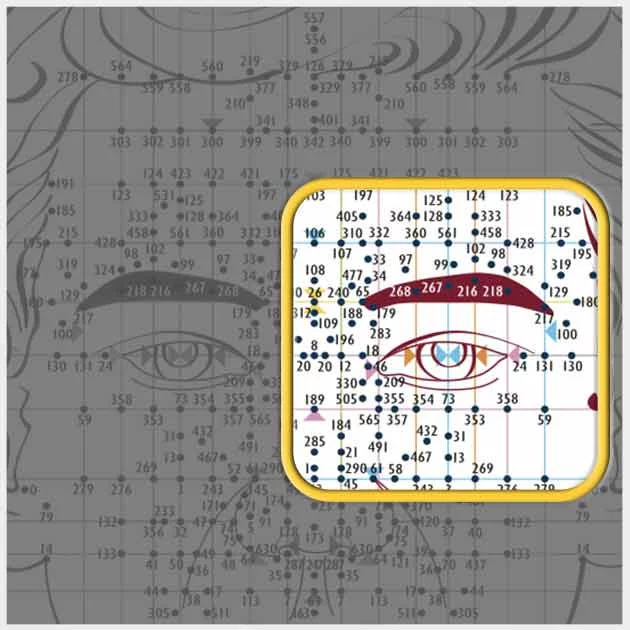
The Dien Chan map is not a tracing: it is an indicative grid, to be projected onto a real face. Its lines rely on reliefs that everyone has: chin, corners of the mouth, nostrils, nasolabial fold, eyebrow ridge. Imagine the horizontal lines as the surface of water: they follow the relief. Only the «0» line follows the hairline.
The coordinates table does the rest: Roman numerals for the front lines, Arabic numerals for the profile. bqc·point 188·, for example, is located in rectangle IV-V / B-C. As no face is perfectly symmetrical, it is always the relief that decides, not the drawing.
Three reflexes to get started: the person faces you, gaze fixed; the detector stays perpendicular to the skin, so the angle changes constantly. The benchmark of accuracy is simple: it is the point that must be sensitive, not the pressure.
The original map has an Asian look and the illustrator took inspiration from Prof Bùi Quôc Châu's hair, but its lines are universal and speak to every face. The Faceasit app offers the revised version, with coloured lines and small triangles that indicate the supporting relief.