07 / 09
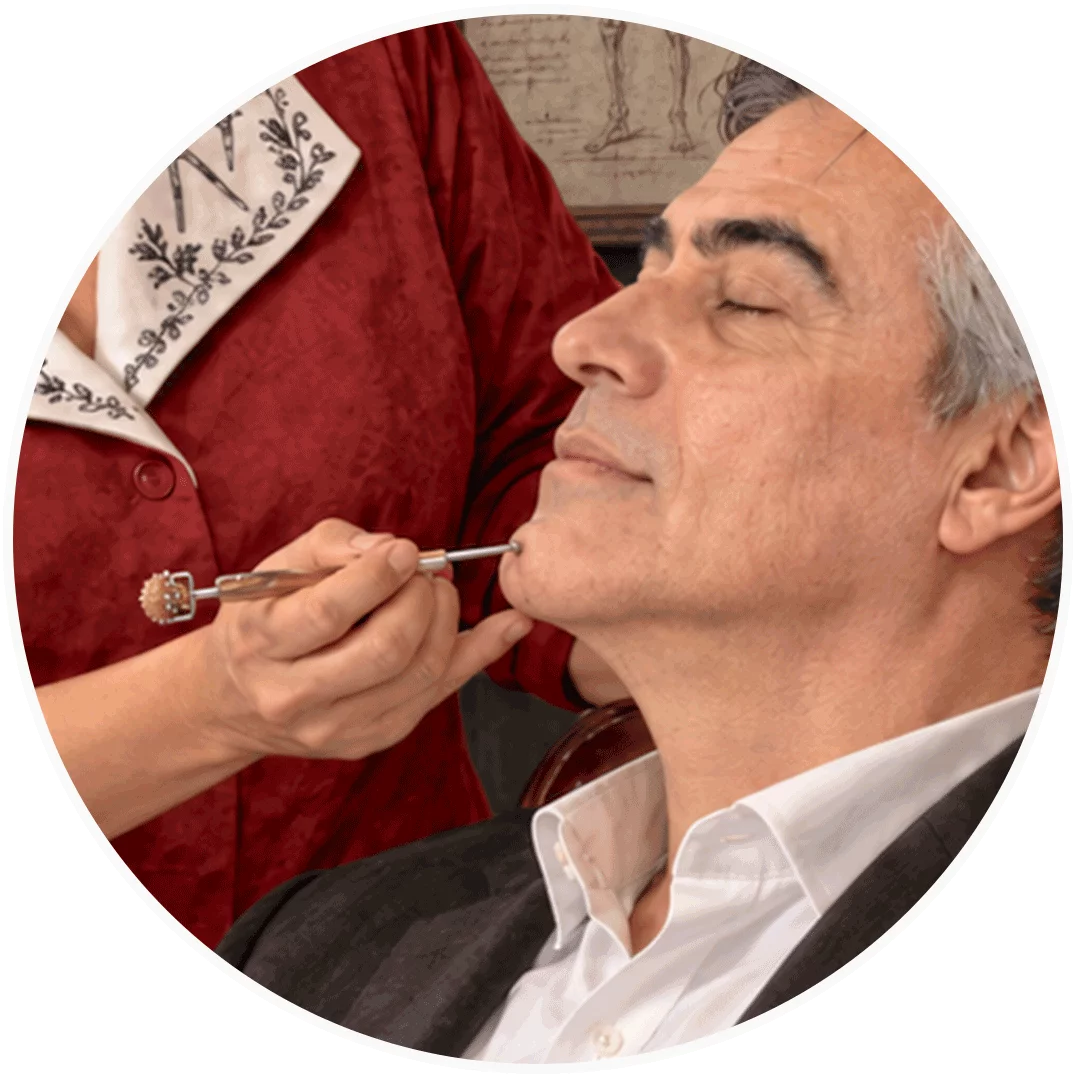
Stimulating a bqc·point
A bqc·point is detected with the multireflex detector nº101, then stimulated. Never a needle, never any alteration of the skin: precision comes from the tool and the gesture, not from force.
Moving towards the point
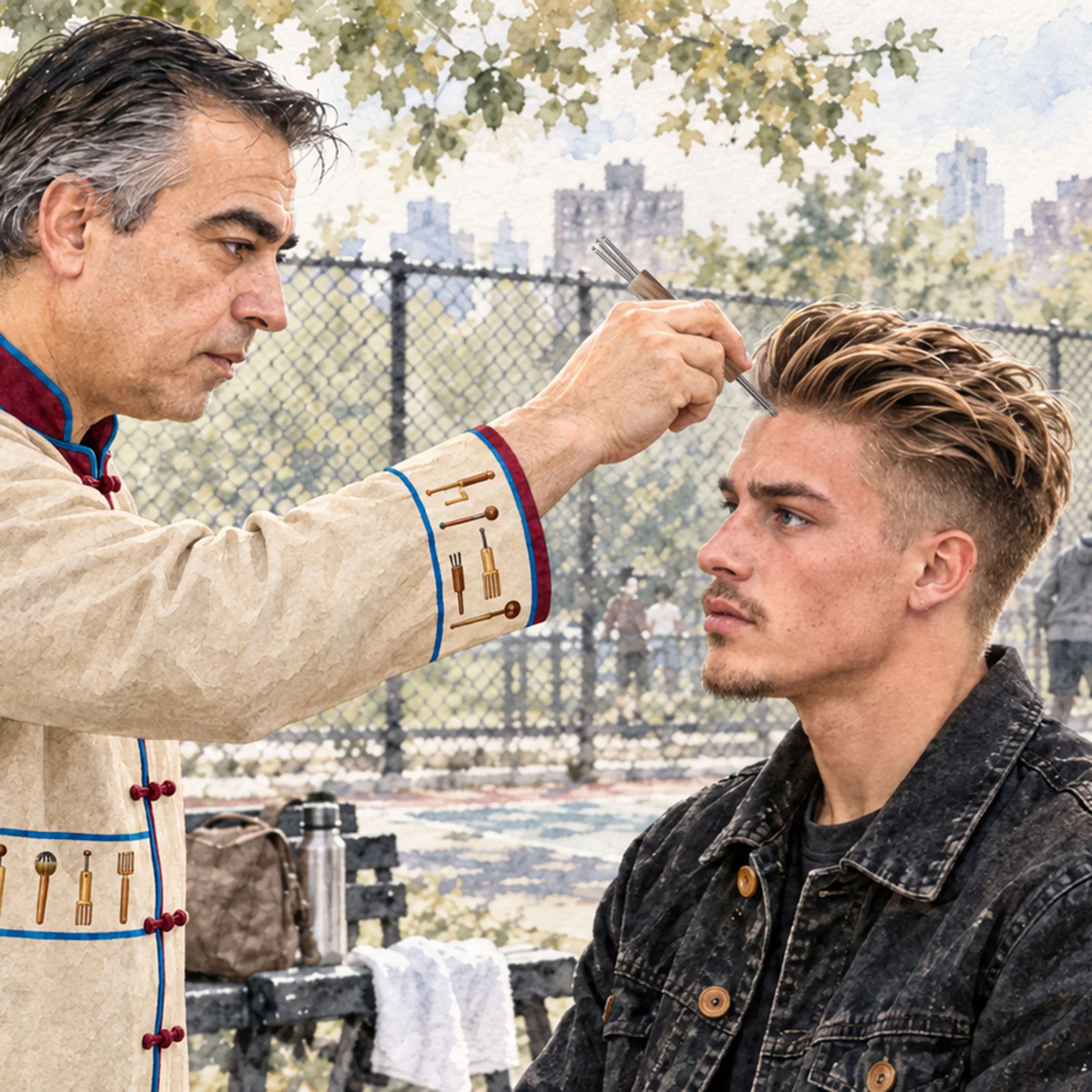
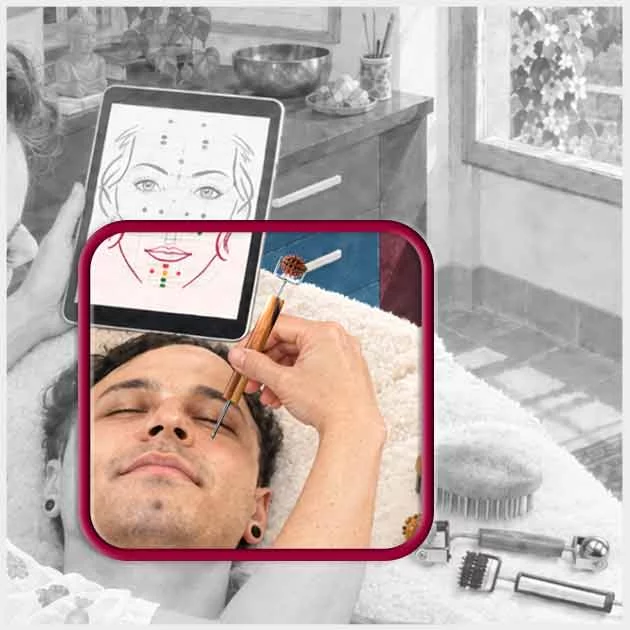
Slowly glide the detector towards the supposed location of the bqc·point. The order matters: you move towards the point, you do not start from where you think it is. Even with correct coordinates, an offset of a millimetre is common, especially on the forehead, nose and chin, where the points are close together.
It is the point that signals itself, not the map that decides.
➳ The gesture, in three stages:
-
The detector stays perpendicular to the skin; as the face is not flat, the angle changes constantly.
-
A constant pressure is applied until the person reports a small, precise sensation that must come from the point, not from pressure on the skin.
-
Once the point is found, you move away, then return to it to confirm its position.
-
The stimulation then lasts about thirty seconds, sustained but not penetrating.
The vibratory variation
Another way to stimulate: a small vibratory movement that slightly displaces the epidermis without scratching it.
The direction does not matter at all. This gives a dynamic stimulation rather than a simple pressure, over the same duration of about thirty seconds.
Choosing the right detector
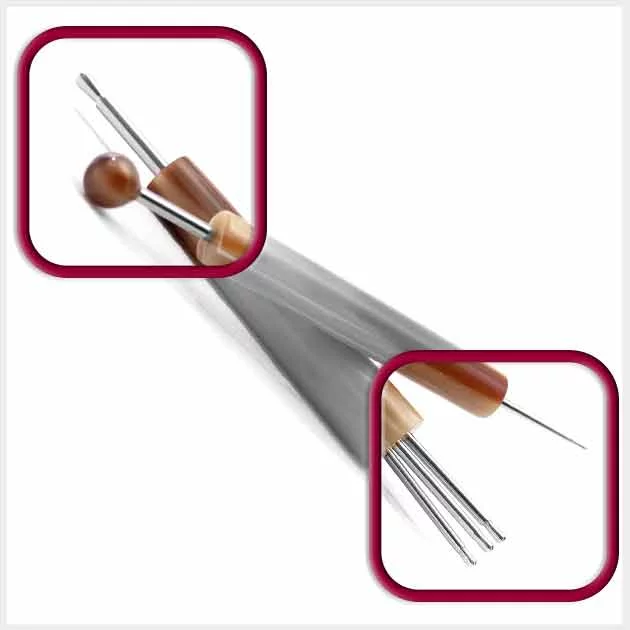
The nº101 remains the reference, because it lets you feel exactly the pressure you apply. Spring-loaded detectors do not allow this, and a tip that is too thick blurs the assessment of the reaction.
When the skin is very thin, fragile or sensitivity is very high, the large detector of the Comet nº133 is preferred. With experience, you can tell the point's reactivity from the person's sensitivity, and the choice of tool becomes obvious.
Beginner's mistakes
Pressing too hard, chaining together too many points. Searching for the point to the millimetre instead of letting it signal itself.
Without serious training, you hesitate, lack confidence, or, on the contrary, press hard and in the wrong place.
The person receiving the session then confuses pressure on the skin with the sensitivity of the bqc·point, and the benchmark of accuracy disappears.
This is precisely what the guidance of a trainer corrects in a few minutes.